OUR PROGRAMS AND SERVICES
A BREAK THAT BUILDS SKILLS: ADEM’S STORY
When Rabaa first heard about CLTO through the Ability Team at SickKids Hospital, she was searching for support for her son, Adem. Caring for a child with complex needs can be demanding, and at the time Rabaa was struggling to find a program that could meet Adem where he was. Many traditional respite programs were unable to support children with higher behavioural needs.
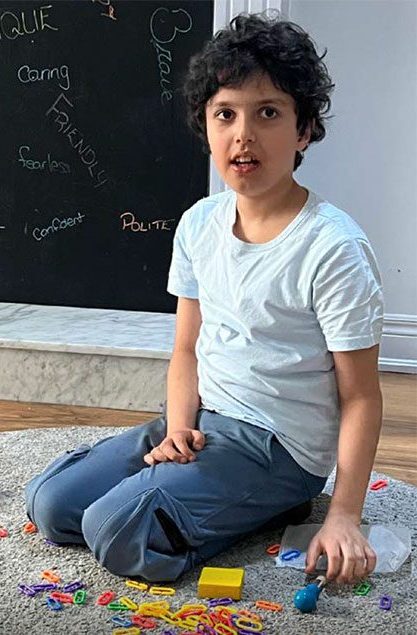 Through the recommendation of the hospital team, Rabaa applied to our new Therapeutic Respite Model, which was codesigned with referral families for children and youth whose needs cannot be safely supported in traditional respite settings.
Adem is a 9-year-old child diagnosed with Autism Spectrum Disorder, Attention-Deficit/Hyperactivity Disorder, and an intellectual disability. These developmental conditions influence how he learns, communicates, and interacts with others. Adem is generally very energetic and tends to be highly active throughout the day. He often demonstrates a high level of movement and impulsiveness, which can make it challenging for him to remain seated or focus on tasks for extended periods of time.
Delivered in partnership with CLTO, Lumenus, and the Special Needs Advisory Group, the Therapeutic Respite Model offers structured five-week blocks of weekday programming to children while remaining in their family home by combining respite, individualized skill development, and coaching for families.
“The program provided exactly what I needed,” she shared. “It gave me the opportunity to rest and step back from the daily challenges while knowing Adem was in a safe and supportive environment.”
Throughout the program, Adem participated in structured activities designed to build communication, daily living skills, and regulating emotions. Staff also worked closely with Rabaa, sharing strategies she could continue using at home.
“When Adem came home on the weekends, I could see the changes,” Rabaa said. “He started using new words and communicating more. I also noticed he was becoming more comfortable using the toilet independently. These may seem like small things, but for us they were very big steps.”
Knowing he was developing new skills in a program that he was happy in made it possible for Rabaa to take time to recharge and focus on other responsibilities, something many caregivers of children with complex needs rarely have the opportunity to do. Staff regularly shared photos and updates showing Adem engaged in activities and connecting with the team.
“It was very reassuring,” Rabaa said. “I could see that he was comfortable and enjoying himself.”
As of March 2026, seven families participated in the pilot program and many have reported improved behavioural stability, increased independence in daily routines, and greater confidence in managing challenges at home.
“I truly hope to have the opportunity to apply again,” she said. “It made a meaningful difference for both Adem and our family.”
As the sector shifts away from residential placements and we close the doors to some of our children’s locations, flexible community-based support like our Therapeutic Respite Model represents an important step forward. This model helps children build critical life skills while giving families the coaching they need to support their children at home. For families like Adem’s, that support can change everything.
PROGRAM UPDATE
Expanding Supports for Families
Community Living Toronto is evolving how it supports families by expanding more flexible, family and community-based services. Through this shift, we launched our Therapeutic Respite Pilot, designed to help more children with complex needs build skills while providing support to their families at home.
As part of this transition, and following a review of our programs and finances, we made the decision to close the Morningside and South Station children’s specialized resource homes. We remain committed to ensuring smooth transitions and continued care for every child and family we support.
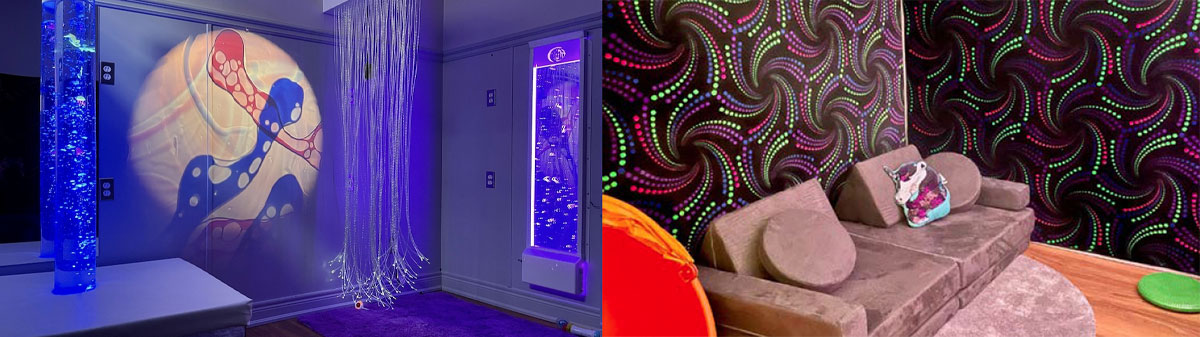
CREATING A SUPPORTIVE COMMUNITY FOR JOHN AND HIS FAMILY
When John first joined our organization, his family was looking for support that would help him grow in his own way. John is a bright and curious 10-year-old navigating life on the mild spectrum of autism spectrum disorder, and his family knew that early support could nurture his social, emotional, and cognitive development.
An Early Childhood Resource Consultant provided a key part of this support, funded by the City of Toronto under the “Every Child Belongs Model.” This collaborative model brings together City staff and 19 community agencies, working collectively to ensure that children of all abilities can meaningfully participate in licensed childcare and early learning programs.
Early Childhood Resource Consultants also work closely with licensed childcare centres to build staff capacity, offering coaching, modelling, and hands-on support. By partnering directly with educators, they help create inclusive environments and equip staff with tools to support children like John so they can succeed across different settings.
John is full of energy and creativity. He loves building with Lego, listening to music, spending time outdoors, and expressing himself through drawing. He is social in his own unique way, curious about the world around him, and always ready to explore new experiences, especially when he feels supported and encouraged.
Working with the Early Childhood Resource Consultant, John and his family received thoughtful strategies, practical tools, and consistent encouragement. This support helped John build important skills, especially in communication, emotional regulation, and social interaction. For his family, it extended beyond sessions, offering valuable insight into how to continue nurturing his growth at home.
“John has had opportunities to meet other children with similar developmental experiences. He has formed connections with a few peers, and we, as parents, have met other families facing similar challenges, creating a supportive community,” shared John’s mom, Jennifer.
During a group activity, John participated independently for the first time. He followed instructions, engaged with others, and fully immersed himself in the experience. It may have seemed like a small step to others, but for his family, it was a reminder of how far he had come.
“We chose CLTO because of their reputation for inclusive, family-centred programs, and their team’s expertise in supporting children with autism spectrum disorder. The personalized approach and warm environment were key factors in our decision,” continued Jennifer.
John’s early childhood consultant, Yolana, has played an especially meaningful role. Through her steady guidance, he has moved through challenges and celebrated successes. For John’s family, the journey with Early Childhood Services has been more than just support. It is a partnership that has helped John become more confident in who he is and what he can achieve.
CREATING A HOME FOR PEOPLE WITH PRADER-WILLI SYNDROME
After a number of people moved from their downtown group home for a beautiful home at one of our vertical communities, it provided an opportunity to re-imagine their now vacant house. After careful consideration and discussion, it was decided that the home would be well-suited to support people with Prader-Willi syndrome (PWS), a rare genetic disorder affecting approximately 1 in 10,000 to 30,000 people.
A primary characteristic of PWS is difficulty recognizing when the body is full. The part of the brain responsible for regulating hunger does not function normally, resulting in a persistent feeling of hunger even after eating. Supporting those with PWS requires a specialized space and staff team. When provided with the right environment, people with a diagnosis of PWS can lead full, healthy, and happy lives.
Rebecca, a vibrant 31-year-old woman with PWS, joined CLTO in January 2025 and moved into this home equipped to support up to two people. It was a significant transition for her, as it marked her first time living away from her parents, sister, and dog, Ziggy. Her parents have always been very involved and strong advocates within the PWS community. From the outset, we worked closely with her family to ensure her move was thoughtful, supportive, and as smooth as possible.
Rebecca’s new apartment is in a house that was converted into two one-bedroom apartments in the heart of the city, and her roommate shares the same diagnosis. The staff team have individualized their support around Rebecca and truly see her as the wonderful person she is, not just the diagnosis she has.
To deepen our understanding, we arranged for specialized training with The Latham Center. Staff completed sessions on the fundamentals of PWS syndrome, including dietary management, behavioural strategies, and effective support techniques. This training has increased our confidence and consistency in supporting Rebecca.
“Since 2012, CLTO has built strong partnerships with developers to create welcoming vertical communities. Together, we have supported 170 tenants in 114 deeply affordable apartments across seven Toronto neighbourhoods. Creating more options for people has provided further opportunities for others, like Rebecca, that prefer and benefit from a quieter environment in one of CLTO’s houses,” shared Frances MacNeil, Senior Director of Supported Living.
We also ensure Rebecca has access to her community by collaborating with other community resources and working with our staff team to manage her support. Today, it is heartwarming to see how well she has settled into her new home and the pride she demonstrates when giving a tour of her apartment.
This is our first PWS focused supported living home and a model we hope to adapt to support a variety of diagnosis. We are committed not just to providing support, but to nurturing a home where everyone feels valued, understood, and supported to thrive.
BUILDING OPPORTUNITIES FOR EMPLOYMENT THROUGH MYJOBMATCH
Meaningful employment begins with opportunity, but it also begins with choice, confidence, and the right support. MyJobMatch empowers job seekers to explore employment opportunities with greater independence while bringing employment professionals together to collaborate in new ways. By connecting partners and sharing knowledge, MyJobMatch helps empower individual choice while shaping future success.
The platform brings together employers, job seekers with disabilities, and employment support professionals to track opportunities, create matches, and support people in securing employment that reflects their interests, strengths, and goals.
This year, two MyJobMatch job seekers, Kayla and Jan, demonstrated how collaboration, persistence, and advocacy can help overcome systemic barriers and create a more inclusive labour market.
Through the sharing of ideas and resources among partner agencies, an opportunity was identified for Kayla to develop skills in digital marketing which is an area of strong personal interest. Kayla, who is 33 years old and has an intellectual disability, wanted to pursue this field but the path was not straightforward. With advocacy and collaboration from partner agencies, Kayla was accepted into a three-month digital marketing training program despite not meeting all the standard entry requirements.
This opportunity has enabled Kayla to learn new technical skills, build confidence, explore a career aligned with her interests, and take steps toward a future she helped choose for herself.
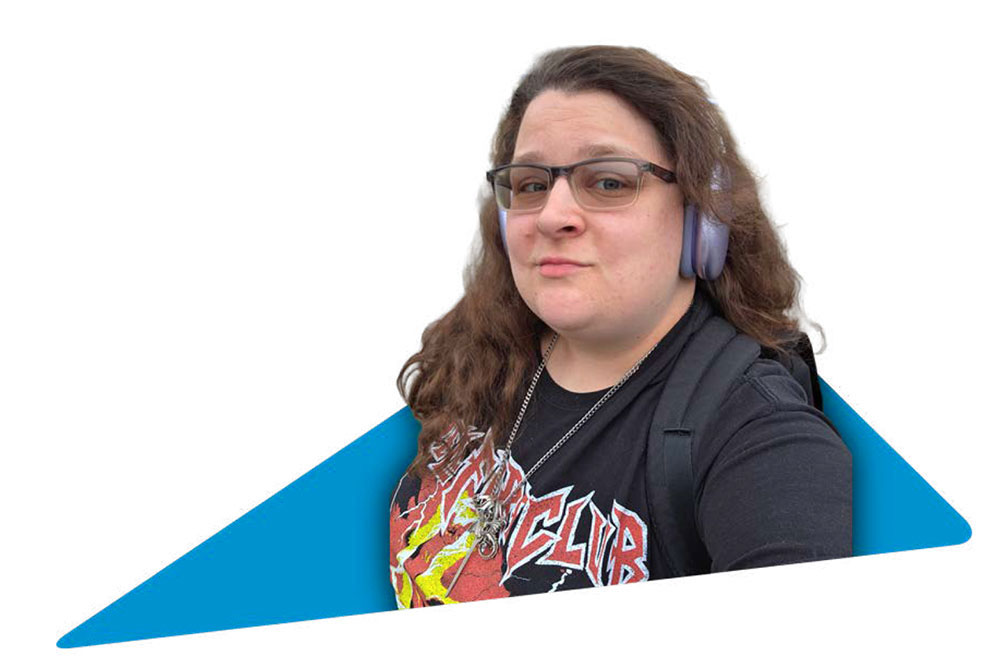
Kayla is exploring a future in digital marketing, building confidence and skills through MyJobMatch
Jan’s journey also reflects the power of the right support at the right time. With the guidance of an employment consultant, Jan was supported step-by-step through the online application process on the grocery store’s careers website. Jan, who is in his 20s and has an intellectual disability, received hands-on assistance creating his online profile and completing the application successfully.
Once his profile was finalized, it was shared directly with the Retail Workforce Agency job developer responsible for recruitment at the grocery store chain. Through this coordination and advocacy, Jan was invited to interview within three weeks and successfully secured the job. This new job has provided Jan with a sense of independence, confidence, and belonging in the workforce.
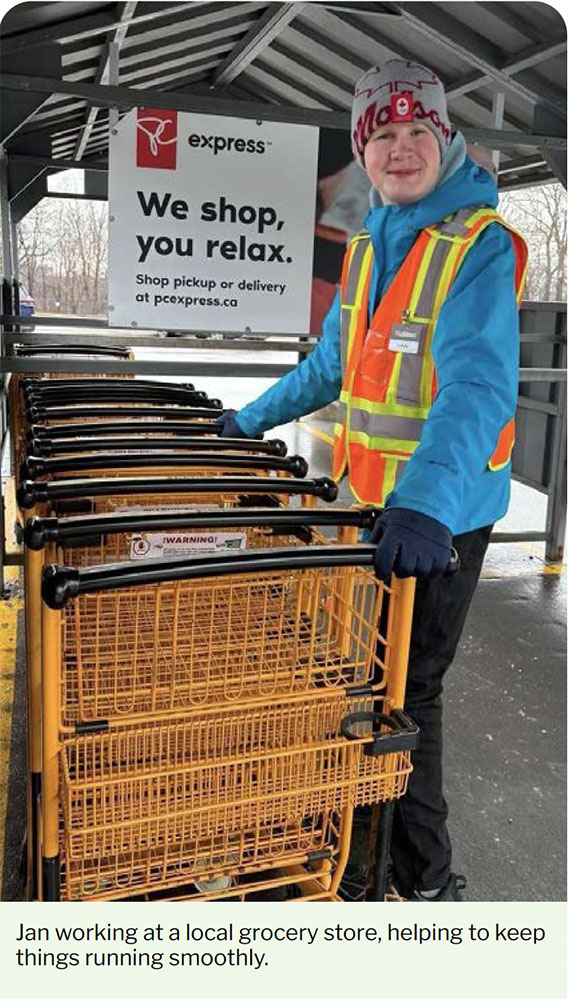 Stories like Kayla’s and Jan’s demonstrate the impact of working together to remove barriers and create opportunities. Through MyJobMatch, partner agencies are not only connecting people to jobs, they are empowering people with disabilities to make choices about their future.

FROM WEST TO EAST: BRINGING CREATIVE POSSIBILITIES CLOSER TO HOME
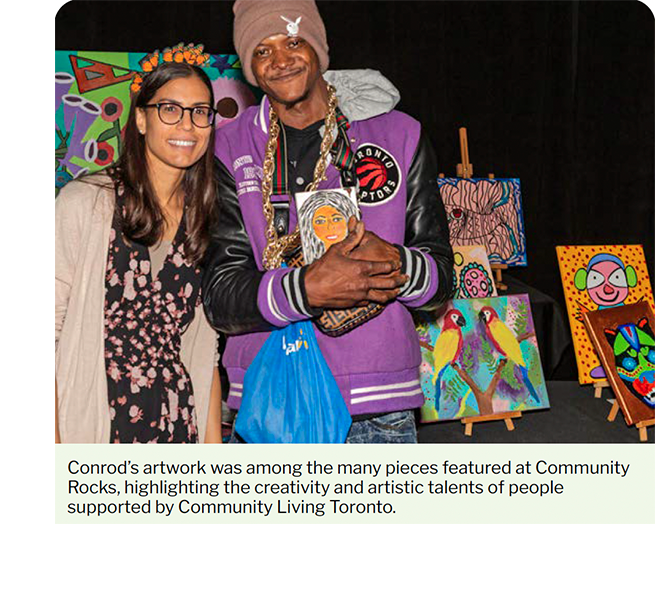 Those we serve and their families often share how much they love the quality and variety of fee-for-service offerings at Community Junction and Creative Village Studios (CVS). We also know how much they wish there were opportunities in the east end of the city to reduce travel time.
For nearly a decade, Conrod has been one of the committed artists at CVS. He was drawn to the program for its social connection and sense of family, the opportunity to create meaningful work, the need to avoid isolation, and his personal goal of becoming a famous artist.
Conrod is 37 years old with an intellectual disability and has been a member of the CLTO family since 2009. CVS began as a place where he could belong and has evolved into a place that nurtured his confidence, professionalism, and sense of independence.
This year, we expanded fee-for-service offerings to three additional locations in the east at Fairfax, Foster Connection, and at Finch. Building on our existing fee-for-service options in the west end to further meet our community in neighbourhoods close to home.
As CVS evolved into new spaces and models of delivery, Conrod embraced the transition. He was also excited about the opportunity to showcase his art to new audiences at the MarchFifteen Consulting Inc.’s Art Exhibit and the Community Rocks event. His work was even commissioned this year by Lauren McGuire! These achievements strengthened his professional identity and demonstrated the impact of structured, inclusive arts opportunities for people with intellectual disabilities.
When reflecting on fee-for-service programs he attends, Conrod shared, “You know what I love more than art? Donna! And the rest of the CLTO team.”
CVS has provided Conrod with a genuine sense of belonging and community, which he describes as his “second family.” The studio offers a constructive outlet to channel his complex, layered thoughts, and emotions onto canvas for others to see and appreciate. Through exhibitions and paid commissions, he has also earned income from his work, reinforcing his independence.
As CVS and its fee-for-service offerings continue to expand, more artists like Conrod will benefit from intentional, outcome-driven supports designed to reduce isolation, foster creative expression, and advance economic and social inclusion. His journey shows that when opportunity is paired with the right support, growth, and contribution, community connection naturally follows. We are pleased to be part of Conrod’s journey and others who will benefit from new opportunities in the east end of the city.
A YEAR OF TRANSITION: HOW KWAME REIMAGINED HIS SENSE OF BELONGING
Following the death of his parents, Kwame moved in with his brother and a long-time family friend, Bernadette. He also began attending Community Participation Supports (CPS) programs at our Fairfax location where he enjoyed games, sports, community outings, and socializing with friends.
In late 2024 however, Kwame’s housing became precarious and eventually collapsed. By that time his brother had moved out of the country, and the family friend was unable to take Kwame with her into her new housing situation. This left Kwame, 60 years old with non-verbal autism and a seizure disorder, at risk of homelessness.
Our CPS and Respite team moved swiftly into action, marshaling internal resources and exploring creative ways to support Kwame. In discussions with Supported Living, the Transitions team in Specialized Services, and Kwame’s family friend, Kwame was placed on the Community Needs List, a registry managed by Developmental Services Ontario for those waiting for ministry-funded services and supports. In February 2025, he moved into a Community Safe Bed at our Sibley Parkview location.
“I was terrified for Kwame and worried sick that he wouldn’t find somewhere he could call home again. I don’t know what I would have done without the help of CLTO,” shared Bernadette, family friend of Kwame.
After several months on the Community Needs List and a year into his housing crisis, Kwame found his new home at Roundwood that supports seniors with complex medical needs.
In May 2025, Kwame moved into Roundwood where he was welcomed by the team and his new housemates, many of whom he knew well from his years at Fairfax. Since then, he has become a part of the home, jumping into help with favourite chores such as sweeping and cleaning. Kwame also continues to attend Fairfax and spends a lot of time shooting hoops and working out at Variety Village, a local hub for recreational activities.
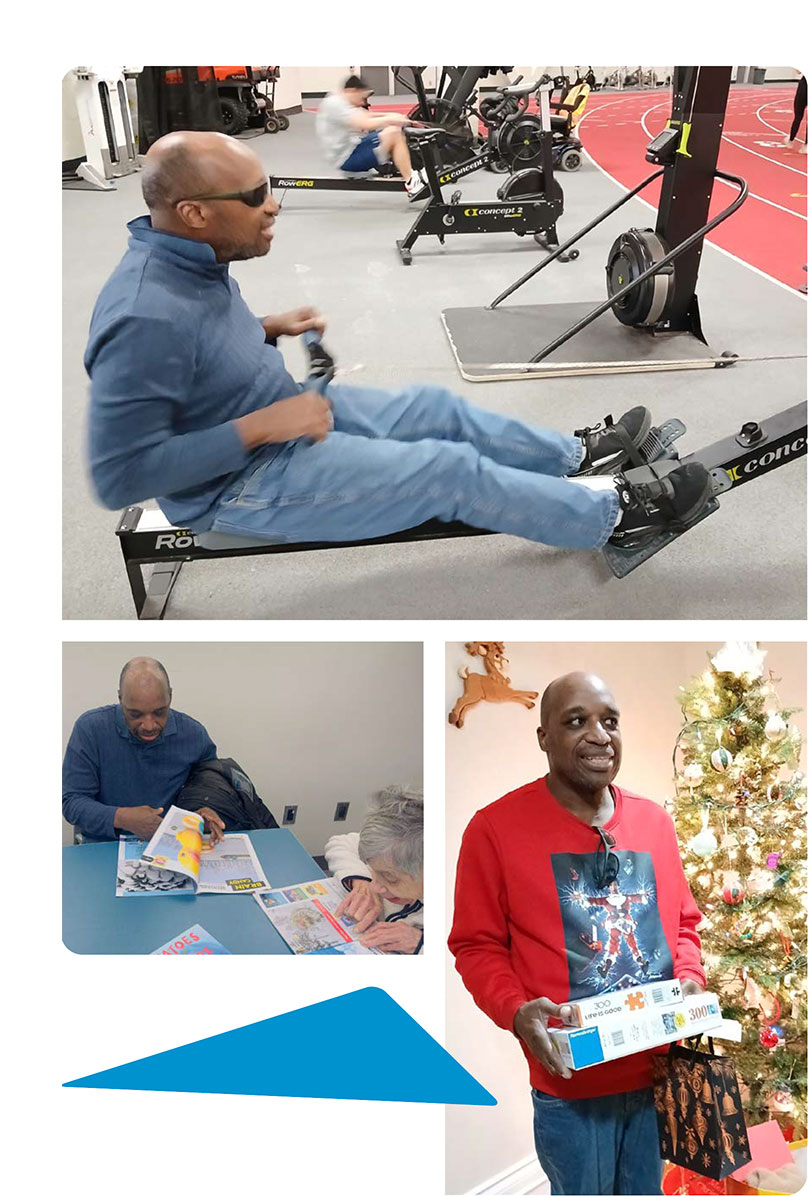
“I have been able to hear updates about Kwame’s transition and be actively involved in his care. I am so grateful to be able to maintain a relationship with him and his new family at Roundwood,” shared Bernadette, family friend of Kwame.